What Is a Machine Tool and How Does It Create Precision Parts?
Machine tools are powered machines that shape metal by removing material. This explainer answers how lathes, mills, and other machine tools transform raw stock into precise components, and how CNC controls have changed fabrication.
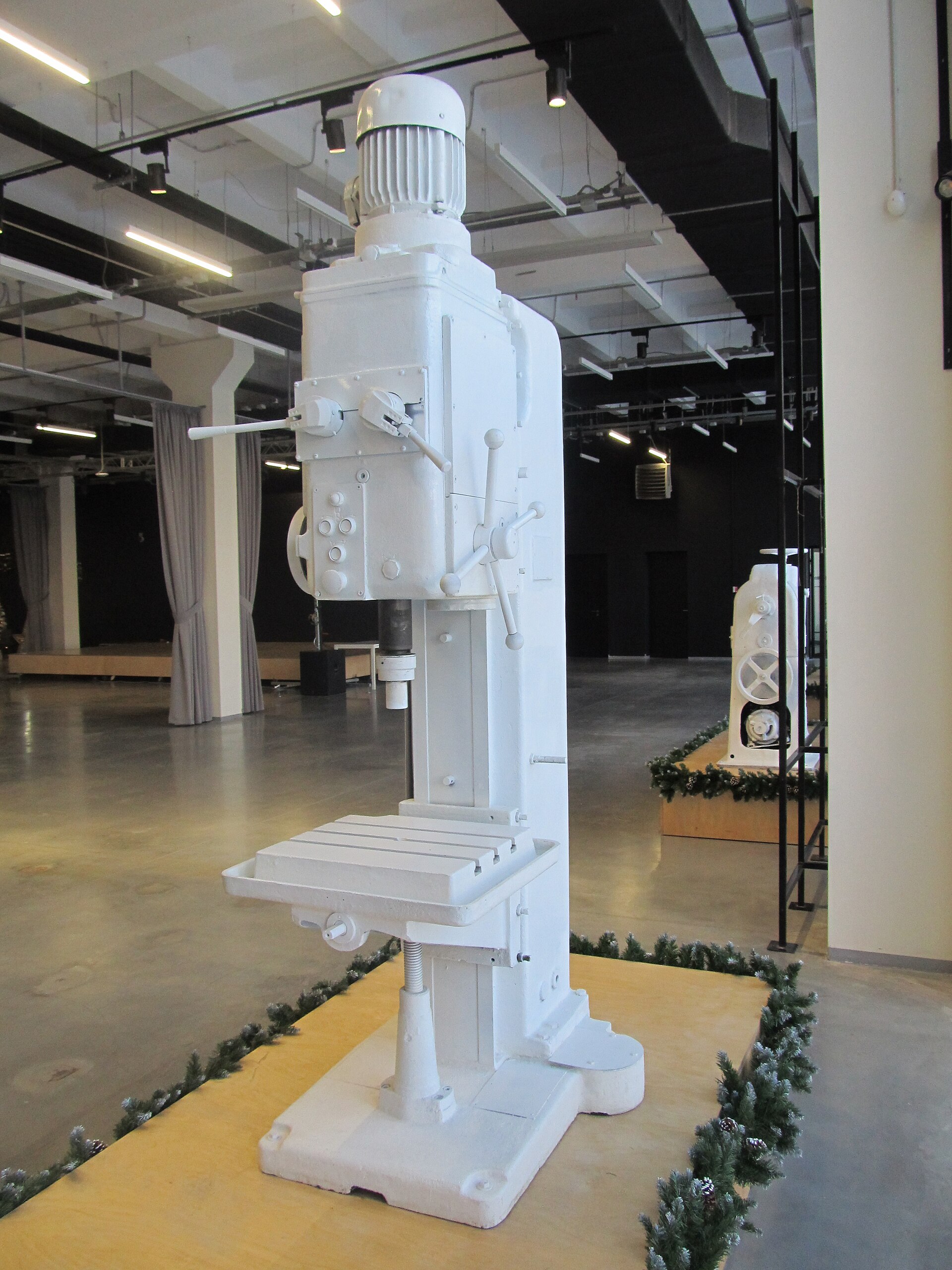
Cover: Own work · Wikimedia Commons · CC BY-SA 4.0
Question: What is a machine tool, and how does machining produce precise fabricated parts?
What counts as a machine tool?
A machine tool is a powered machine used to shape or finish metal by removing material. Common examples include lathes, milling machines, drill presses, and grinding machines. These tools hold the workpiece and a cutting tool, then create relative motion between them so that a controlled layer of material can be cut away. The result is a part with a specific geometry and surface finish. Unlike assembly or forming processes, machine tools are fundamentally subtractive: they start with solid stock and remove what is not needed.
How does machining remove material?
Machining removes material through a shearing or abrasive action between a cutting tool and the workpiece. The tool is harder than the material being cut, and the machine moves one or both in a controlled path. Important process choices include cutting speed, feed rate, and depth of cut. Cutting speed is how fast the tool or workpiece moves past each other; feed rate is how quickly the tool advances; depth of cut is how thick a layer is taken off. These choices affect tool life, surface quality, and the heat generated. Lubricant or cutting fluid is often used to cool the cutting area and flush away chips.
What changed when computer numerical control became common?
Computer numerical control, or CNC, turns a design into a series of coded commands that move the machine axes automatically. A programmer writes the program, a machinist sets up the workholding, and the machine follows precise tool paths. CNC makes it practical to create complex contours that would be very difficult with manual hand-wheel machining. It also improves repeatability: once a program is tested, the machine can reproduce the part consistently across many cycles. Numerical control is now standard in milling, turning, electrical discharge machining, and many other machine-tool processes.
What fabrication methods depend on machine tools?
Machine tools are central to several common fabrication processes. Milling uses rotating multi-point cutters to remove material across flat or contoured surfaces. Turning rotates the workpiece against a stationary cutting tool to create cylinders, cones, and similar shapes on a lathe. Drilling creates or enlarges holes, and reaming or boring improves their accuracy. Grinding uses an abrasive wheel to refine surface finish and achieve tight tolerances. These methods are often combined in a fabrication workflow to turn raw metal into parts for engines, tools, fixtures, and industrial equipment.