If you're in the market for welding soldering equipment, you're likely weighing two very different tools: a 110V gasless MIG/stick machine priced at $86.99 and a 250A pulse MIG from VEVOR that costs $255.90. The budget unit is built for light, occasional repairs; the VEVOR is designed for more serious fabrication work. The challenge is deciding whether the extra $168.91 actually buys you welding capability you'll use, or whether it's overkill for your projects. Here's how to break that down.
Quick verdict
If you need a portable welder for hobby projects, thin metal, and property maintenance, the 130A unit is the smart money pick. If you regularly weld thicker steel, need cleaner welds, or want a machine with more control features, the VEVOR 250A is worth the step up. The right choice boils down to your material thickness, how often you weld, and how much floor or bench space you have.
Comparison table
| Feature | 130A 2-in-1 Flux Core/Stick | VEVOR 250A 5-in-1 Synergic |
|---|---|---|
| Price | USD 86.99 | USD 255.90 |
| Max output | 130A | 250A |
| Welding modes | Flux core MIG + stick (MMA) | 5-in-1 synergic MIG |
| Control | Auto wire-feed and voltage match, or manual | Synergic control + pulse technology |
| Power input | 110V | 8.2 KVA input capacity |
| Extras | Portable DIY design | IGBT inverter, LCD display, 11 lb wire spool |
Where each product wins
The 130A unit wins when your priority is portability. It weighs only 10.2 lbs, which makes it simple to move around a garage, toss in a truck, or use on a ladder. The auto wire-feed and voltage matching mode also helps beginners get consistent results because the machine sets the correct feed and voltage once you select the wire diameter.
The VEVOR 250A wins for output and control. The 250A maximum gives you headroom for thicker materials, and the power delivery is designed to keep the arc stable during longer sessions. That adds up to cleaner finishes and fewer stops on demanding projects.
Product notes
130A 2-in-1 Flux Core/Stick Welder
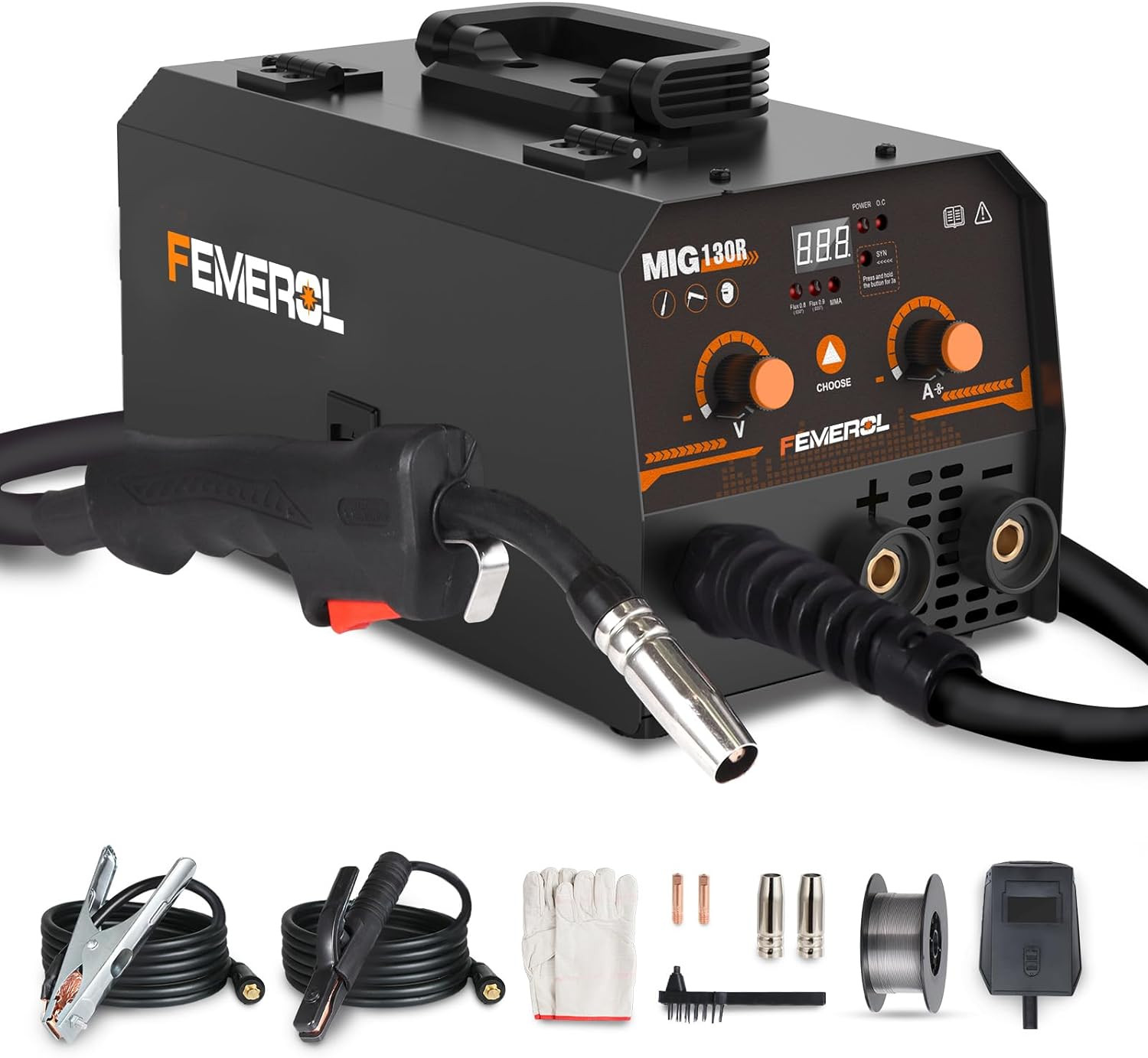
This machine is a strong first welder because it combines gasless flux core MIG with stick welding, so you can weld stainless steel, carbon steel, and mild steel without a gas tank. The standout feature is the auto-match control: after you select the wire diameter, the welder sets the voltage and wire feed speed for you, which shortens the learning curve. It's also compact and portable at just 10.2 lbs, so you can easily take it to a fence or a trailer. The included MIG torch, electrode holder, and ground clamp get you started right out of the box. The trade-off is the output ceiling: it has enough power for thin to medium sheet metal, but not for repeated long weld runs or thick plate. It's a capable light-duty tool, not a production machine.
VEVOR MIG Welder 250A Pulse 5-in-1 Synergic
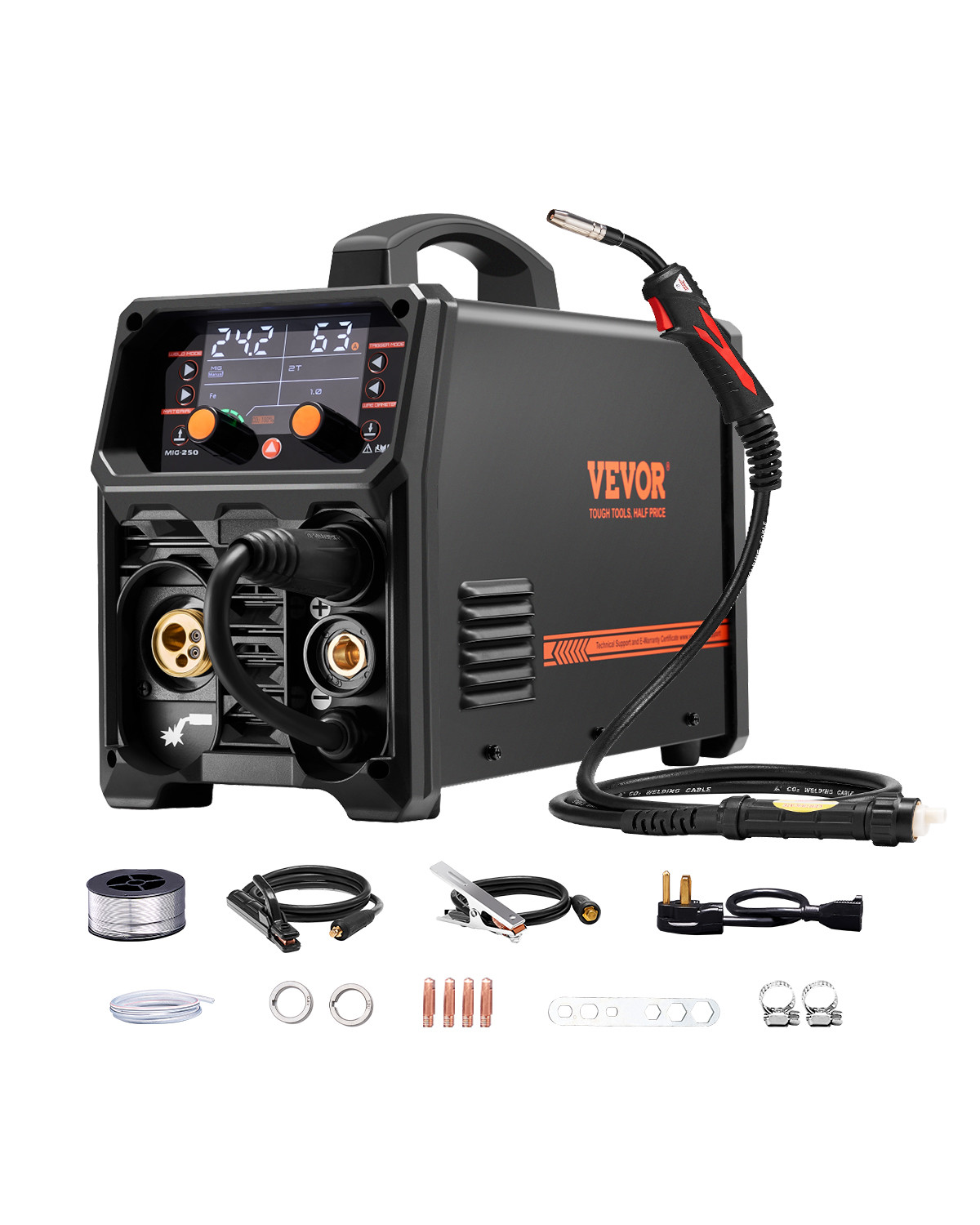
The VEVOR is for welders who have outgrown a hobby machine. The 250A output gives you the power to weld thicker steel with confidence, while the advanced pulse technology runs at lower temperatures than traditional MIG, which means less spatter and cleaner, more professional-looking welds. The IGBT inverter helps keep the arc stable, and the LCD display puts key parameters in front of you for precise adjustments. If you do a lot of welding, the 11 lb wire spool capacity means fewer spool changes and less downtime between jobs. The limitation is the learning curve: this is a multi-process machine with more modes and parameters to manage, and that setup time adds up if you only need a single process. For regular fabrication projects, the extra capability is worth the attention.
Final choice by use case
For a homeowner, hobbyist, or farm repair situation, the DIY-focused welder is the easier daily tool for small repairs and thin metal. For a small workshop, a DIY fabricator, or someone who welds weekly on heavier stock, the VEVOR gives you the muscle and advanced controls to handle demanding jobs. Look at the thickness of your most common material and the number of hours you spend welding each month, then pick the machine that matches that workload.