Choosing between two industrial additive 3D printing references usually comes down to the same question: do you want a deeper look at one technical problem, or a wider survey of an emerging technology? The two titles here split that difference neatly. Precision Metal Additive Manufacturing approaches the field from the precision side, while Hybrid Metal Additive Manufacturing covers the hybrid-process landscape. The right pick depends on where your work sits on that spectrum.
Quick verdict
If you are trying to make metal AM parts repeatable and within tolerance, Precision Metal Additive Manufacturing is the more direct reference. It is a brand-new hardback from Richard Leach and Simone Carmignato, listed at $200.73. If you need to understand the wider hybrid-process field, Hybrid Metal Additive Manufacturing is the broader option. It is a brand-new hardcover by Parnika Shrivastava, Anil Dhanola, and Kishor Kumar Gajrani, listed at $364.84. Both are technical references, but they operate on different scales.
Comparison snapshot
| Feature | Precision Metal Additive Manufacturing | Hybrid Metal Additive Manufacturing |
|---|---|---|
| Listed price | USD 200.73 | USD 364.84 |
| Price bar | ||
| Format | Hardback, Brand New | Hardcover, Brand New |
| ISBN | 9781138347717 | 9781032460550 |
| Author team | Richard Leach and Simone Carmignato | Parnika Shrivastava, Anil Dhanola, Kishor Kumar Gajrani |
| Main scope | Precision and dimensional control | Hybrid processes, technology and applications |
Where each product wins
Precision Metal Additive Manufacturing wins on specificity. It unpacks the dimensional and process obstacles that still slow down metal AM adoption: shrinkage, built-in stresses, limited process stability, high roughness, and remaining porosity. It also connects those obstacles to the practical realities of post-processing and the shortage of qualified, trained personnel. That makes it useful for engineers who need to close the gap between design intent and finished part.
Hybrid Metal Additive Manufacturing wins on breadth. It presents the latest research and development, technical challenges, and future directions across hybrid metal AM, including the modeling of hybrid processes for metals and the hybrid additive manufacturing of composite materials. For someone exploring multi-process workflows, this is the title that shows how the field is expanding.
Closer look
Precision Metal Additive Manufacturing (Leach & Carmignato)
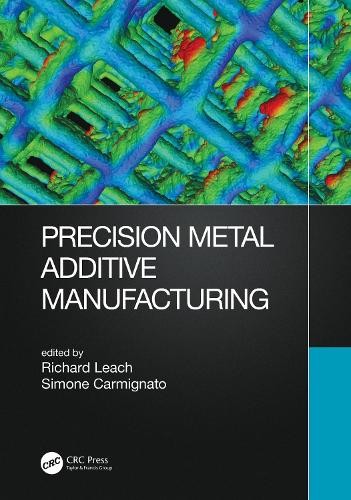
This is the option to start with when the conversation turns to dimensional control. The strength for a working engineer is that precision is treated as a full production problem, not just a metrology problem: post-processing and qualified personnel are part of the story. If you are responsible for making a metal AM process produce consistent parts, this reference gives you the vocabulary to identify where the process loses accuracy. The limitation is scope. Its lens stays on precision and the consequences of limited process control, so a reader who is specifically hunting for a broader survey of hybrid approaches will find that wider territory in the other title.
Hybrid Metal Additive Manufacturing (Shrivastava, Dhanola & Gajrani)
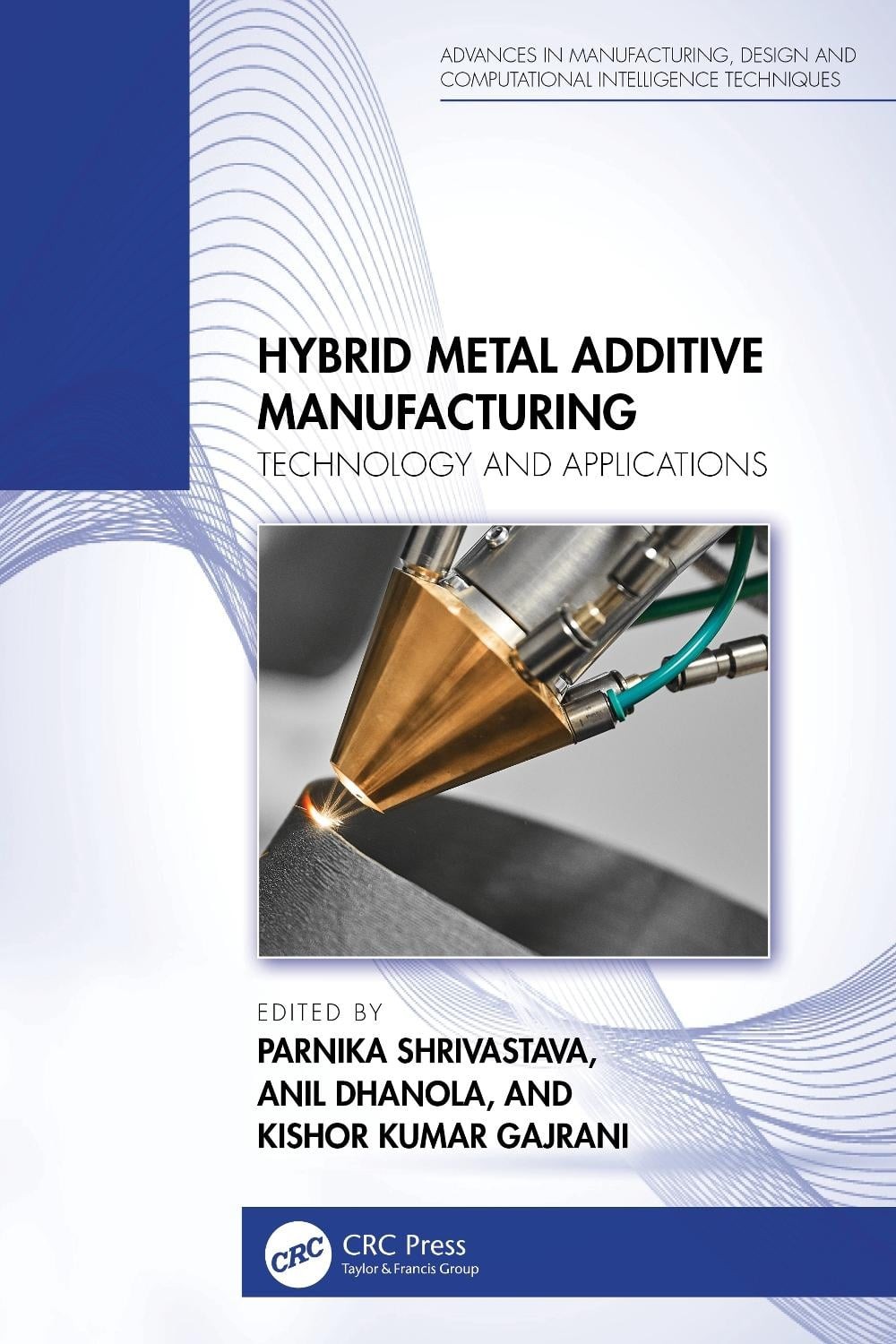
This is the wider map. The book positions itself around the latest research and development in hybrid metal AM, with explicit attention to modeling hybrid processes for metals and for composite materials, along with technical challenges and future directions. For someone evaluating new process combinations, the breadth is the main reason to pick it up: you get a sense of how hybrid approaches are being modeled and where the field is heading. The limitation is the reverse side of that breadth. If your problem is narrower, such as precision control in a single metal AM process, this survey may feel less direct than a dedicated precision treatment. It provides a broad framework rather than a close-up on accuracy.
Final choice by use case
For a process engineer or production team focused on why metal AM parts come out slightly off, Precision Metal Additive Manufacturing is the more targeted reference. The precision-specific framing makes it the direct choice when accuracy and process stability are the priority. For a researcher or technology scout investigating hybrid metal AM, Hybrid Metal Additive Manufacturing gives you the wider perspective. Its breadth is the reason to choose it when you need to see how multiple processes are being combined. Pick the Precision title when you need a deep dive into the obstacles. Choose the Hybrid title when you want to understand the full landscape.