Choosing between two VEVOR MIG welders comes down to how much power you need and which processes you plan to run. The 250A Pulse MIG machine is built around high-output pulse welding with a 5-in-1 synergic design. The 160A 4-in-1 model offers gasless MIG, gas MIG, MMA, and Lift TIG in one unit. Both are listed as new, both use IGBT inverter technology, and both have LCD display screens, so the real differences are output, input capacity, and process focus.
Quick verdict
If your projects involve heavier welding and you want pulse capability, the VEVOR 250A Pulse MIG Welder is the stronger choice. If you want a multi-process machine with a lighter 160A output and a straightforward four-mode package, the VEVOR 160A 4-in-1 is the practical all-rounder.
Comparison at a glance
| Product | Price bar | Listed price | Output current | Input capacity | Best for |
|---|---|---|---|---|---|
| VEVOR 250A Pulse MIG | USD 255.90 | 250A | 8.2 KVA | Higher-power pulse welding | |
| VEVOR 160A 4-in-1 MIG | USD 128.00 | 160A | 4.3 KVA | Multi-process DIY and repair |
Where the 250A pulse machine wins
- Its output and input specifications are the heaviest in this comparison.
- Pulse welding technology is the standout feature, paired with lower spatter and cleaner welds through better thermal control.
- It carries the 5-in-1 synergic label, which points to a more control-oriented machine.
Where the 160A 4-in-1 wins
- The process list is explicit: gasless MIG, gas MIG, MMA, and Lift TIG all in one box.
- Its lower output and lower input capacity keep this unit in lighter-duty territory, making it a flexible option for repair and fabrication tasks.
- The direct naming of compatible wire types and diameters adds clarity for planning your consumables.
Product notes
VEVOR MIG Welder 250A Pulse
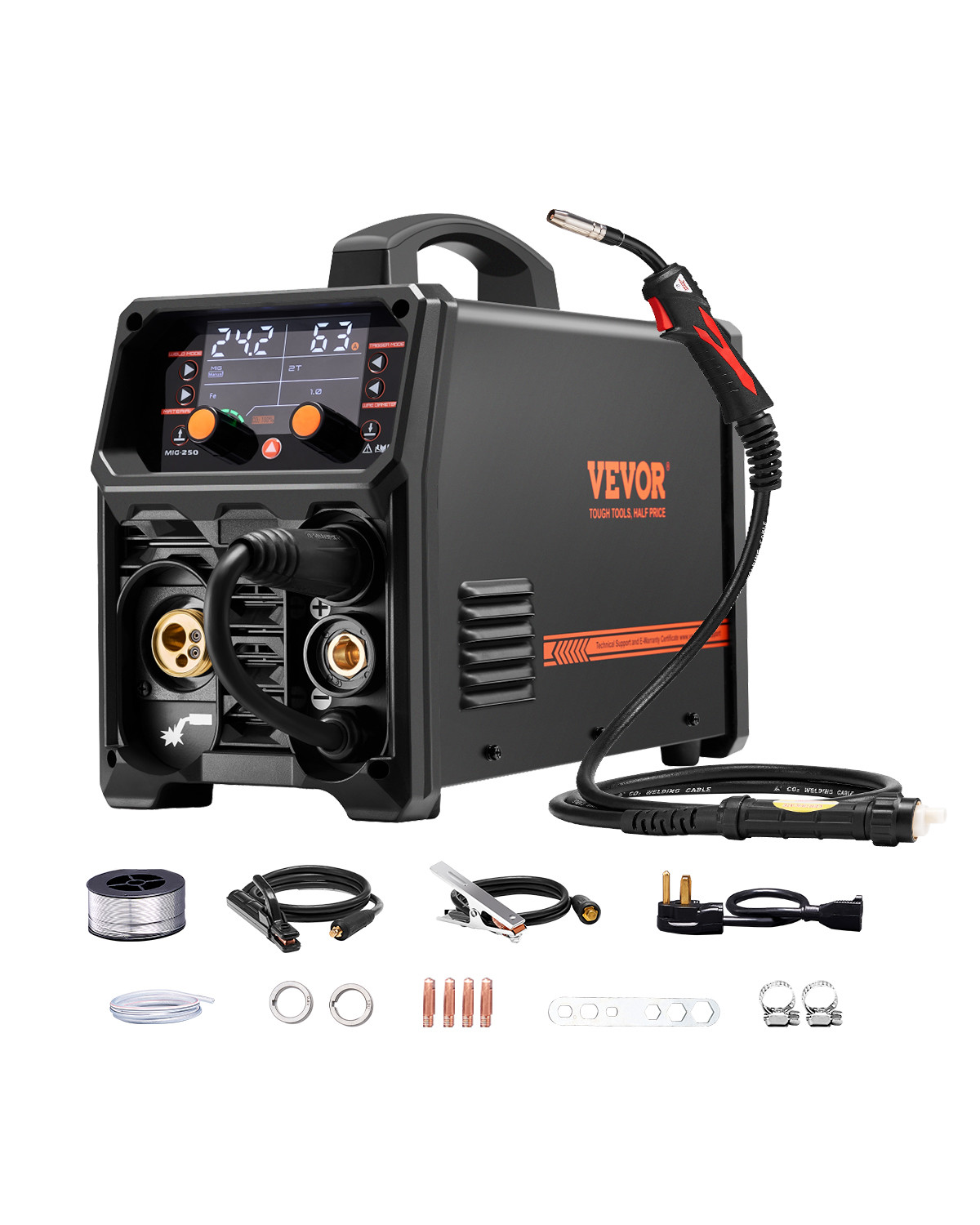
Pulse welding is the headline reason to choose this machine. The pulse mode is designed to produce low-spatter, clean welds at lower temperatures, and it adds a layer of control that the 160A machine does not offer. The 250A unit combines this pulse capability with a 250A output current and a higher 8.2 KVA input capacity, making it the heavier-duty option in terms of raw power. It is also the 5-in-1 synergic model of the pair, which signals a broader, more process-oriented feature set. The trade-off is the higher power draw that comes with the 8.2 KVA input rating, so the electrical side of your setup deserves attention.
VEVOR MIG Welder 160A 4-in-1
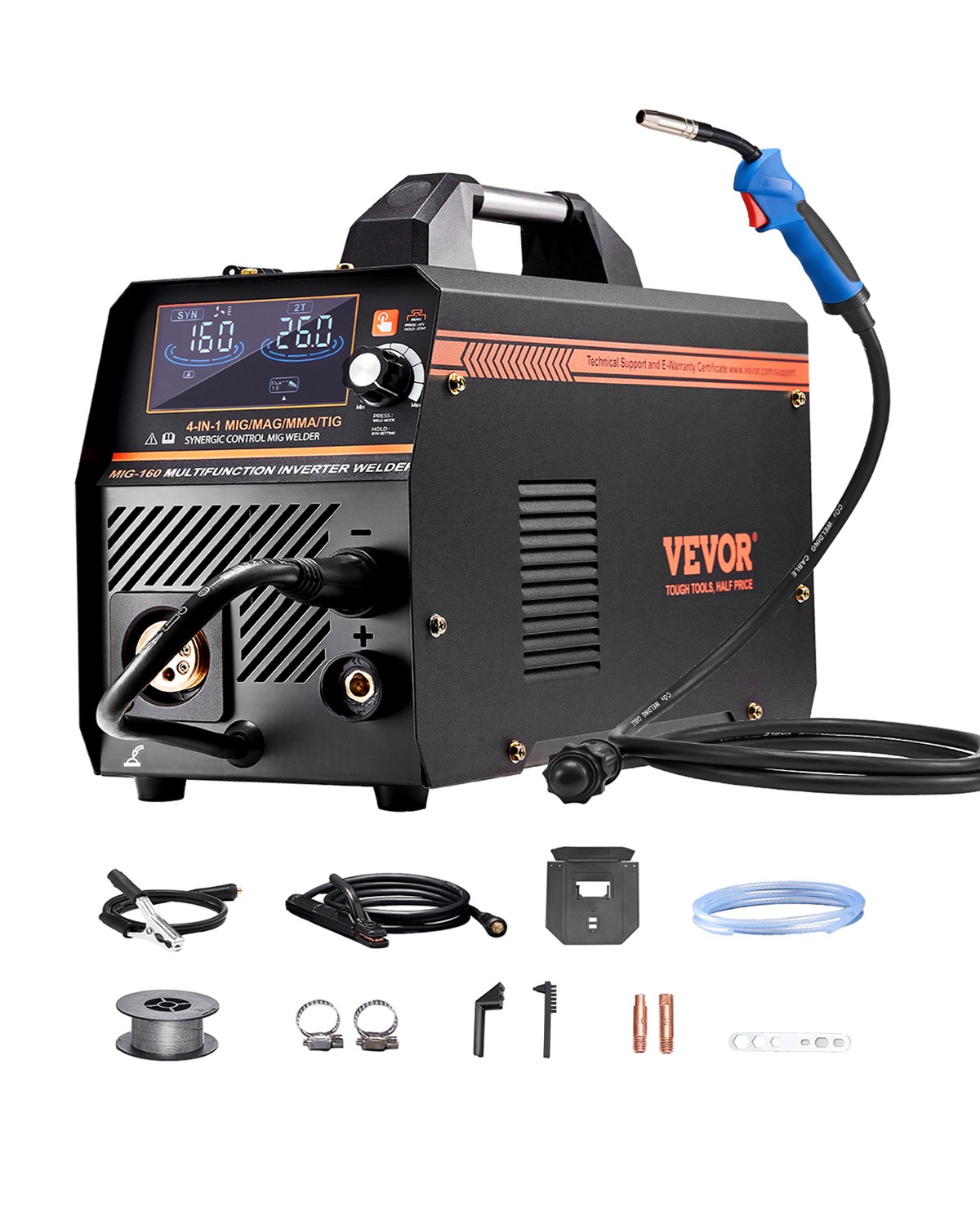
This unit spells out its processes: gasless MIG, gas MIG, MMA, and Lift TIG. It also lists compatible wire diameters of 0.03 inch / 0.8 mm and 0.04 inch / 1 mm, with both flux core wire and gas solid wire supported, which removes some guesswork from buying consumables. At 160A output and 4.3 KVA input capacity, it is the lighter-duty machine, and that makes it a good match for mixed repair and fabrication work where you switch between gas and gasless setups. The limitation is the lower output current, which caps its ability to handle the kind of high-thickness work the 250A model is aimed at.
Final choice by use case
Pick the $255.90 VEVOR 250A Pulse MIG Welder if you need higher output, pulse control, and a synergic feature set for heavier jobs. Pick the $128 VEVOR 160A 4-in-1 MIG Welder if you want four explicit process modes, clear wire compatibility, and a lower power draw for daily repair and fabrication.