Choosing between a desktop laser engraver and a high-power fiber laser cutter is a real fork in the road. In the laser plasma waterjet cutting space, both machines use a laser and both can personalize gifts, but the difference in price and power is massive. The Longer Ray5 is listed at $247.99, while the JPT 2-in-1 desktop fiber laser is listed at $6,299.00. That $6,051.01 spread puts them in different working worlds.
Quick verdict
If your work is centered on personalization engraving and you want to keep the upfront investment down, the Longer Ray5 is the natural fit. It pairs a lower listed price with a built-in touch screen for hands-on control. If you need serious metal cutting and engraving, the JPT 2-in-1 fiber laser is the clear pick. Its higher laser output and metal-focused design put it on another level for heavier jobs.
Comparison at a glance
| Feature | Longer Ray5 | JPT 2-in-1 Fiber Laser |
|---|---|---|
| Brand | Longer | scotle |
| Listed price | $247.99 | $6,299.00 |
| Condition | Used | New |
| Laser power | 20W | 800W |
| Listed speed | 24,000 mm/min max processing speed | ≤15 m/min combine speed |
| Engraving application | Gift personalization | Gift personalization |
| Engraving method | Laser | Laser |
On paper, these two sit at opposite ends of the same category. One is a lower-priced laser for detail work; the other is a high-power fiber machine. The table shows a $6,051.01 gap, and that gap buys a fundamentally different scale of capability. For many shops, the deciding factor is not which machine looks better on a spec sheet but whether the projects you actually run are lighter engraving or heavier cutting.
Where each product wins
The Longer Ray5 is the pick for engraving-focused projects. The JPT 2-in-1 is the stronger choice when you need significantly more laser power, a new-condition unit, and air-cooled fiber design.
Product notes
Longer Ray5
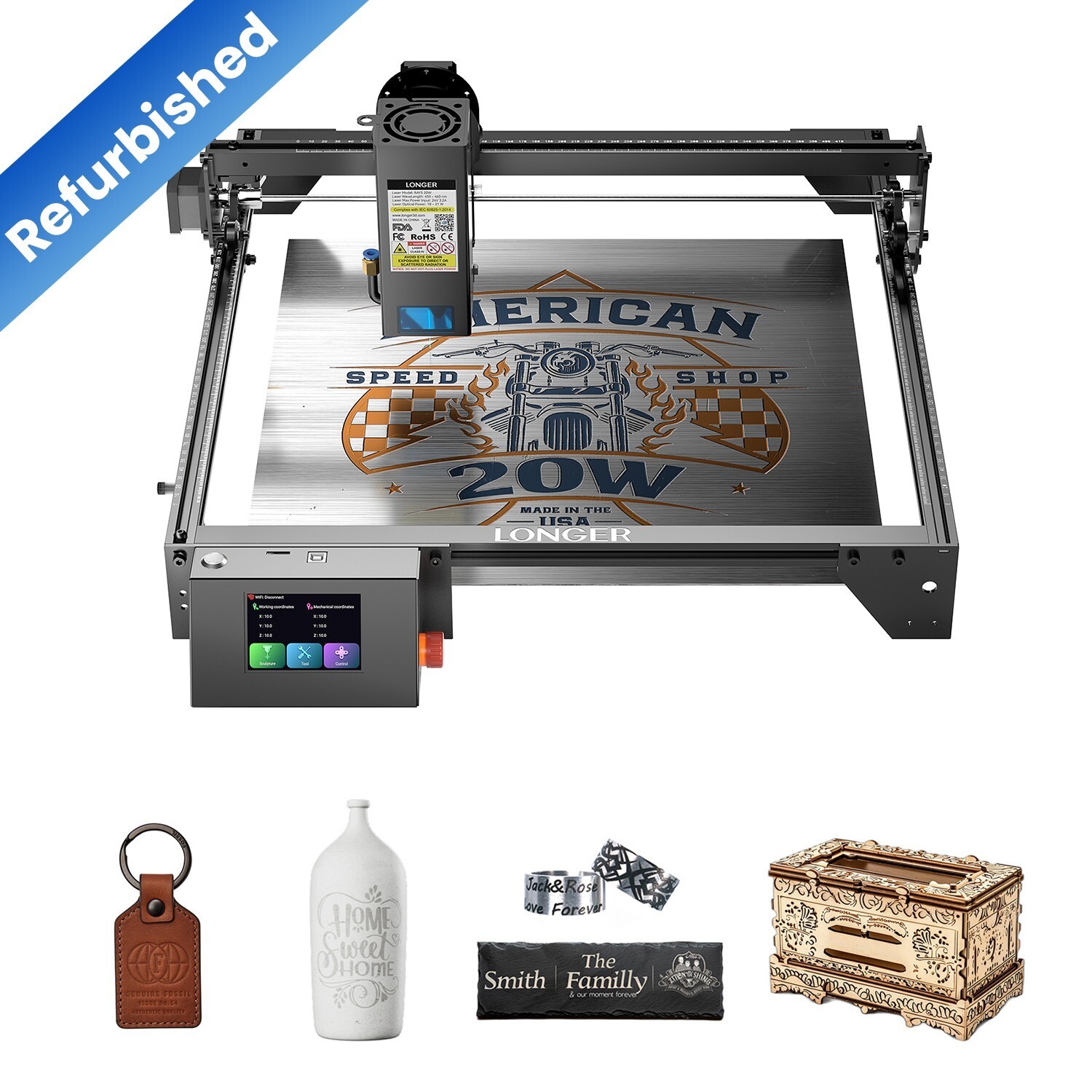
The Ray5 makes sense when your engraving projects are the priority. The listed price is the lower end of this head-to-head, and the built-in 3.5-inch color touch screen puts monitoring and engraving-speed adjustments right on the machine. The 0.08 x 0.1mm compressed beam and precision rails are aimed at fine details, while the 24,000 mm/min maximum processing speed is a fast-looking number on paper. Because it is a used unit, you'll want to factor that in before committing. At 20W, its output is far below the JPT machine, so it is not positioned for the same kind of heavy work. If your goal is engraving projects through laser, this option keeps the cost of entry much lower.
JPT 2-in-1 Fiber Laser
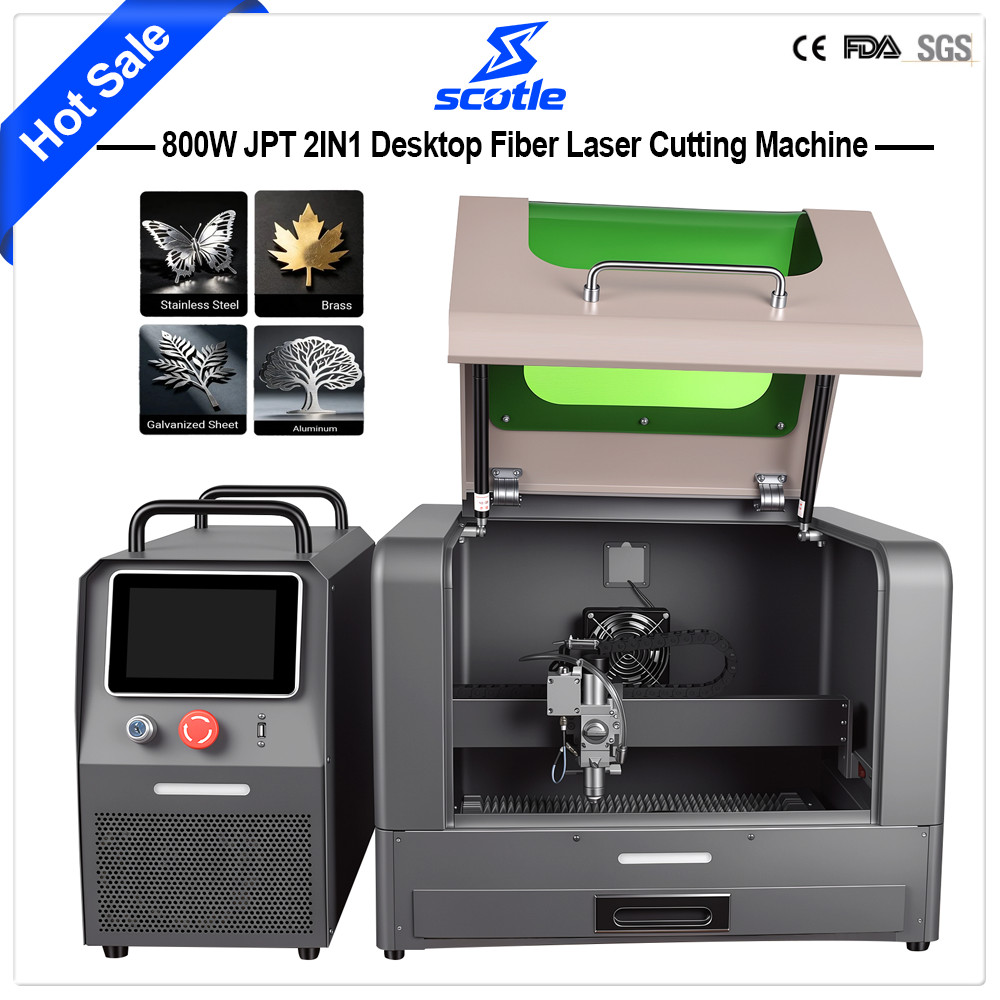
The JPT machine is built for a different workload. The 800W laser power is far higher than the Ray5's output, and the title positions it for metal cutting and engraving. It comes as new, with air cooling, a fiber laser wavelength of 1080nm, and a desktop 2-in-1 format that combines cutting and engraving. All of that comes with a much higher listed price, so the investment is not trivial. For buyers who process metal on a regular basis, this is the machine that matches the task. It is a serious step up in power and should be paired with realistic project volume and workspace expectations.
Final choice by use case
Choose the Longer Ray5 when you want a lower entry point and your work is engraving-focused. Choose the JPT 2-in-1 when you need the power, new-condition reliability, and high-output fiber laser for demanding projects.