Picking a pick-and-place machine for semiconductor PCB manufacturing usually comes down to scale. Are you placing components in small batches on a bench, or do you need a machine that can sit in a continuous assembly flow? The Opulo LumenPnP v3.2.2 and the Hanwha Samsung SM421 represent those two different starting points, and the more useful question is which one matches the board volume you actually handle.
What to weigh first
Workflow is the first filter. A desktop pick-and-place with a focused operation is a different tool from a multi-spindle production machine, and they don't compete for the same floor space. The Opulo LumenPnP is positioned for bench-level PCB assembly, while the Hanwha Samsung SM421 is positioned for a line-based process. Start with batch size; the machine decision follows. The two machines share a core purpose-placing components on PCBs-but the process around them is completely different.
Quick verdict
For PCB work that happens on a bench, the Opulo LumenPnP v3.2.2 is the simpler fit. For PCB work that has to move through a production line, the Hanwha Samsung SM421 is the stronger fit. Neither is a universal answer; each answers a different assembly problem.
Comparison at a glance
| Aspect | Opulo LumenPnP v3.2.2 | Hanwha Samsung SM421 |
|---|---|---|
| Listed price | USD 1,600.00 | USD 19,000.00 |
| Price bar | ||
| Condition | New - Open box | Used |
| Machine profile | Desktop Pick and Place Machine | Pick and Place Machine |
Where each machine wins
Where the Opulo LumenPnP wins
The Opulo wins when your priority is a tabletop machine for small SMT work. The dual-head arrangement and semi-automatic operation keep placement controlled, which suits low-volume boards. You are not buying a production line; you are buying a desktop pick-and-place that fits the work in front of you.
Where the Hanwha Samsung SM421 wins
The Hanwha Samsung wins when throughput matters. Four spindles and on-the-fly vision support higher-volume placement, and the listed board range goes from 2x2 up to 18x16 inches. That combination points to a machine meant for sustained assembly rather than one-off boards.
Machine-by-machine breakdown
Opulo LumenPnP v3.2.2 Desktop Pick and Place Machine SMT SMD OpenPNP
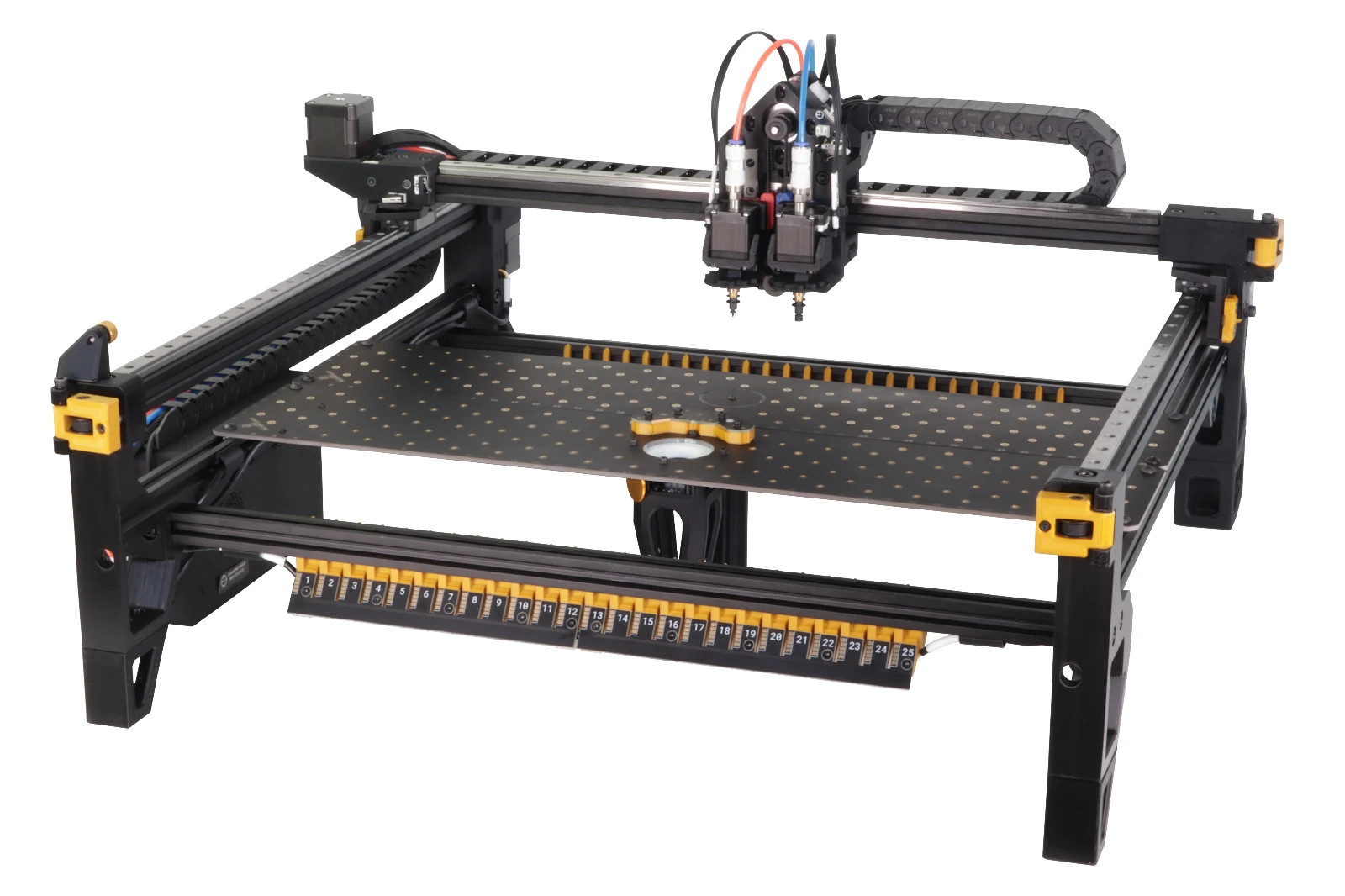
Choose the Opulo for a bench-level pick-and-place that was assembled but never used. The dual-head layout and semi-automatic operation make it a good companion for modest SMT runs, and the open-box condition keeps the entry point accessible. The limitation is the missing tool bag: the tools are present other than a few zip ties, but the kit is not complete. If you need a complete accessory set in the box, that missing bag is what you give up.
Hanwha Samsung SM421 Pick and Place Machine
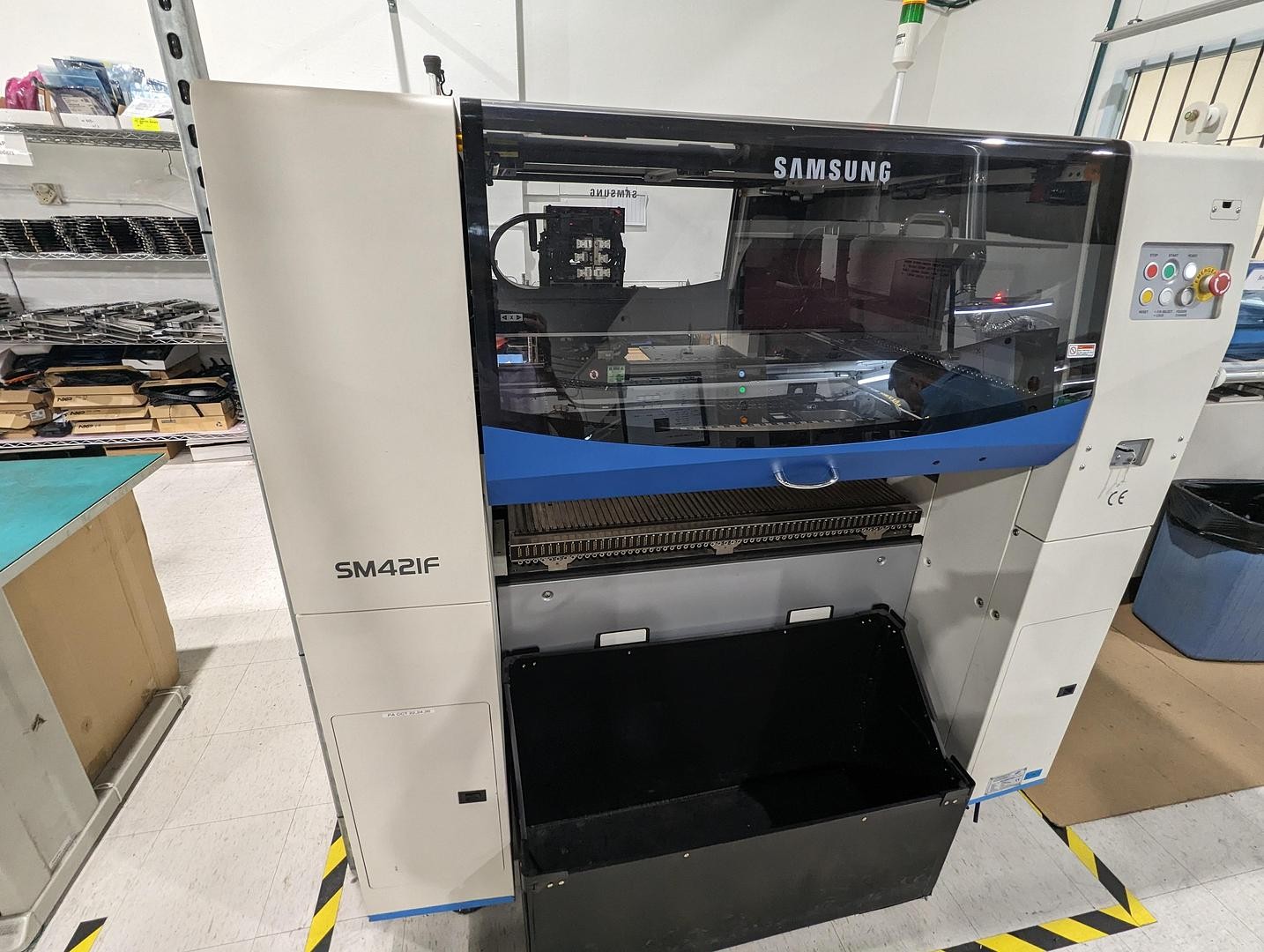
Choose the Hanwha Samsung when your board volume outgrows a desktop unit. Four spindles, a fixed feeder bank, and on-the-fly vision give it a clear production advantage, and the machine lists left-to-right flow for assembly-line integration. The used condition is the main limitation; you are choosing a used production unit rather than a fresh open-box machine.
Final choice by use case
Choose the Opulo LumenPnP v3.2.2 for a bench workflow and small SMT batches. Choose the Hanwha Samsung SM421 for an assembly line that needs a fixed feeder bank and left-to-right flow. Match the pick-and-place to the volume you run, not the other way around. If your volume changes later, the production machine and the desktop unit belong to different stages of that growth.